Sourcing Porcelain Tiles from Morbi, India: Manufacturer Evaluation Guide
A B2B sourcing framework for evaluating Morbi porcelain manufacturers using product fit, technical evidence, quality systems, packing and export readiness.
Technical review: TAG Ceramic Quality Team
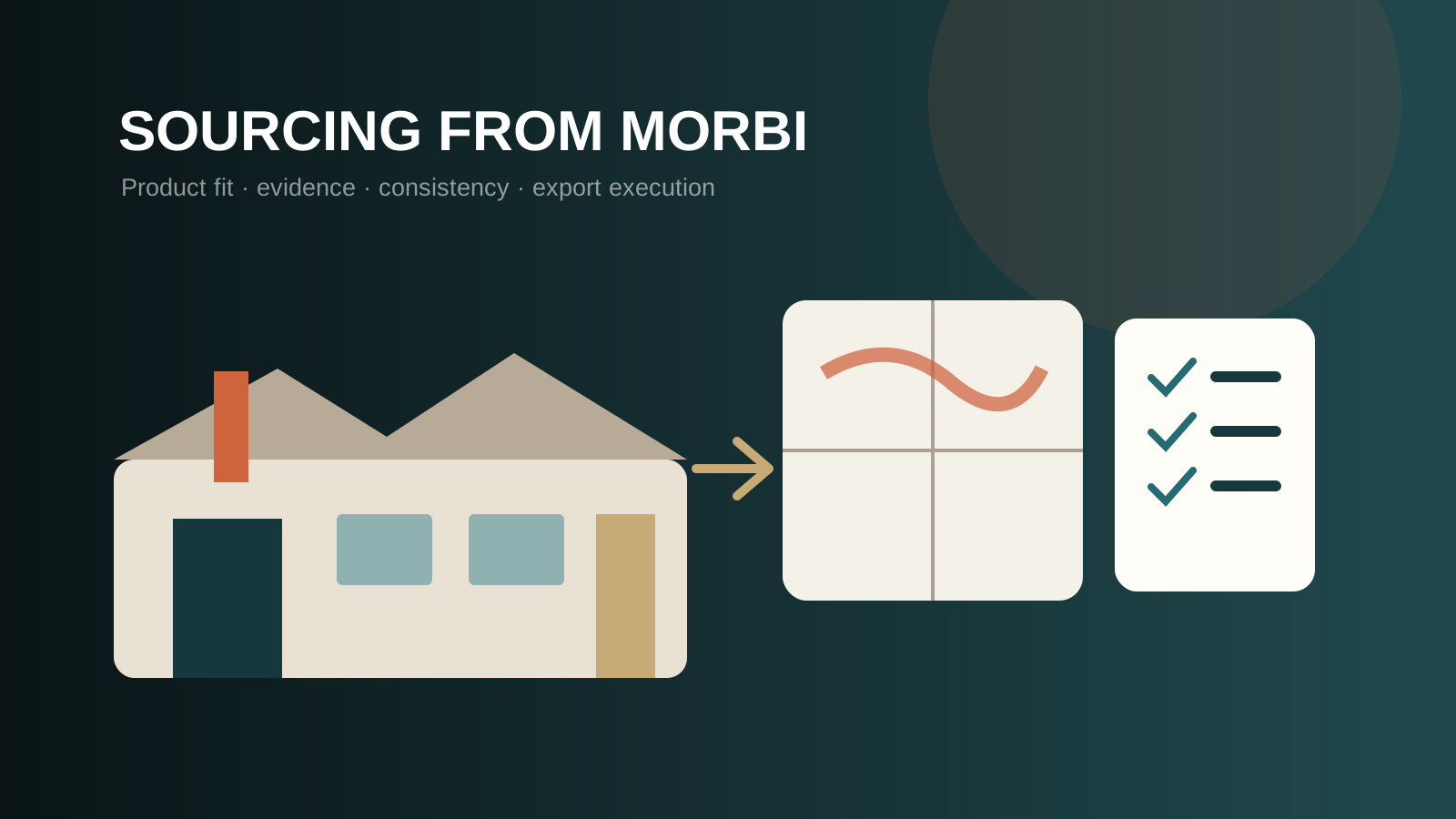
How to evaluate a porcelain tile manufacturer in Morbi
Morbi, Gujarat is a major ceramics manufacturing cluster with a very broad supplier base. That gives international buyers substantial choice, but it also means supplier evaluation should be systematic. The lowest quotation is not automatically the lowest landed-risk option if shade consistency, technical compliance, packing, communication or shipment execution creates problems later.
A good evaluation starts with the exact product requirement and then verifies whether the manufacturer can repeatedly produce and document it.
Manufacturer evaluation scorecard
| Area | Evidence to request | Why it matters |
|---|---|---|
| Product fit | Current size, finish, thickness, surface and design range | Prevents selecting a factory that is not optimized for the required category |
| Technical data | Current test reports/specification sheet for the relevant product | Supports project approval and avoids unsupported claims |
| Quality system | In-process and final inspection checkpoints, shade/calibre controls | Consistency matters across multiple boxes and repeat orders |
| Samples | Physical samples representing intended production | Digital images alone cannot verify surface, colour or edge quality |
| Packing | Box/pallet specification and loading plan | Reduces damage and landed-cost surprises |
| Export process | Quotation terms, documentation, dispatch communication | Critical for importers and distributors |
| Traceability | Design/lot/production identification where available | Helps investigation and repeat ordering |
| Communication | Clear technical/commercial ownership and response process | Reduces delays when changes or exceptions occur |
1. Define the buying specification before comparing factories
Write the requirement in measurable fields: nominal size, finish, thickness, water absorption/classification, colour/look, floor/wall use, packaging, quantity, destination market and required documents. A vague request such as ‘best quality 600×600’ makes supplier comparisons subjective and encourages quotations that are not directly comparable.
2. Separate design approval from technical approval
A buyer can love the visual and still need to verify the body, dimensions and performance. Keep a visual sample approval and a technical/documentary approval in the purchasing workflow. If the market or project requires a specific standard/certificate/test, confirm it before production rather than after goods are ready.
3. Ask how consistency is controlled during production
The goal is not to hear that ‘quality is checked’; the goal is to understand where variation is detected. Ask about incoming raw materials, process controls, dimensional inspection, surface inspection, shade/calibre sorting, packing checks and final lot approval. The exact factory workflow can differ, but there should be a repeatable system.
4. Compare total risk and landed value—not only ex-factory price
Commercial evaluation should include packing efficiency, freight, potential breakage, rejection risk, lead time, payment terms, documentation and the cost of solving a quality issue after arrival. A slightly higher unit price can produce a lower total risk if the supplier's product and execution are more consistent.
Is Morbi only suitable for low-cost tile sourcing?
No. Morbi contains a wide range of manufacturers and product positions. Buyers should evaluate individual factories, products, technical evidence and quality systems rather than treating the manufacturing cluster as one quality level.
Should an importer visit the factory?
For significant or recurring business, a factory visit or qualified third-party assessment can provide useful evidence about process, capacity, quality controls and packing. It does not replace product testing or written specifications.
Evaluate TAG Ceramic as a 600×600 porcelain source
Review manufacturing, quality, technical and export resources, then send the exact product and market requirements to the TAG Ceramic team.
Talk to export team